The University of EdinburghSchool of Physics & Astronomy
High‑Pressure Fluids & Planetary Mixtures
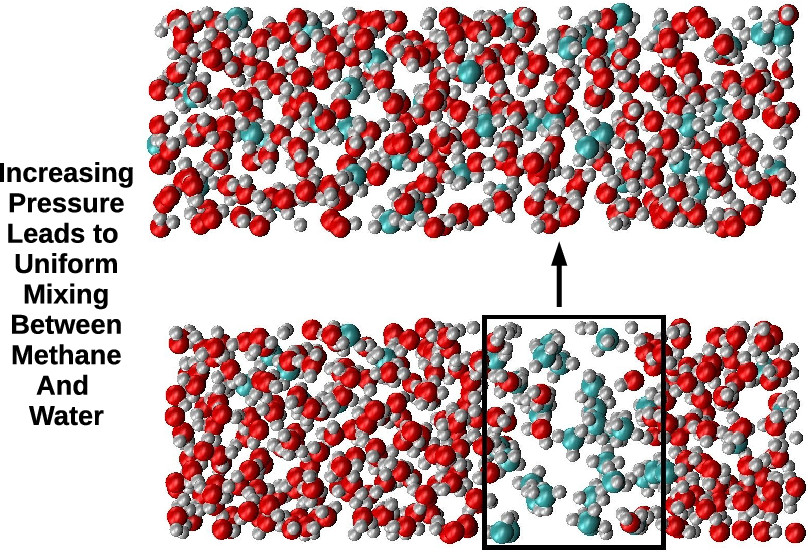
Under gigapascal pressures, water and methane become unexpectedly miscible: methane solubility in water can exceed 35 mol% near 2–3 GPa, overturning everyday intuition and informing models of icy giant interiors.
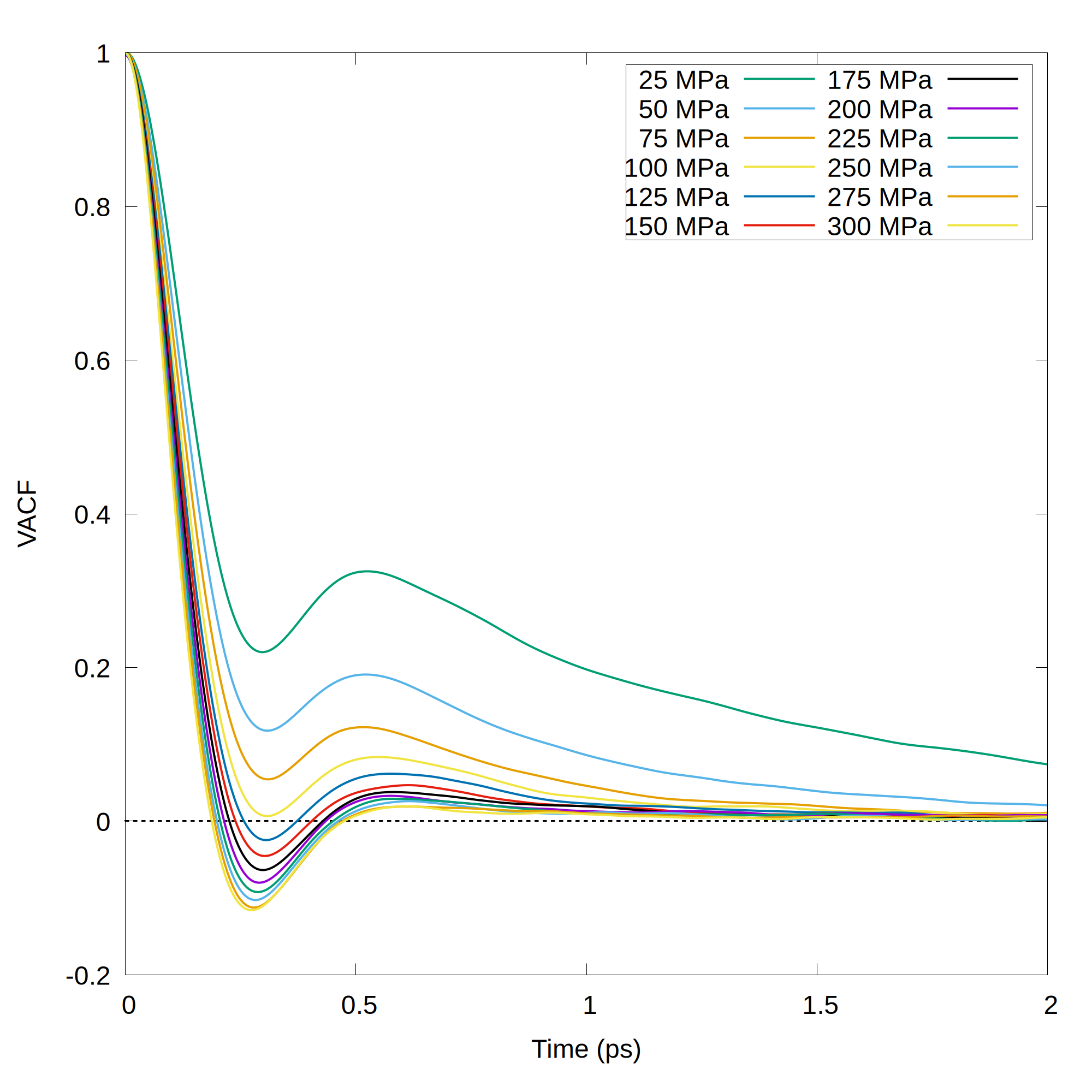
Given the velocity of a molecule, VACF measures how
fast it is moving some time later, on average. At low pressure
(25MPa) the nitrogen molecule "remembers" its velocity for several
picoseconds. Above 100GPa, molecules are so densely packed that the
molecule is likely to have hit another and bounced back. At room temperature, a nitrogen molecule travels it own diameter in about 0.5ps. Density functional theory calculation for methane in
water shows that the hydrogen-bonding network distorts without
breaking around a single methane molecule. Because it make only
four bonds to its neighbours, water has an open structure. At
high pressure, squeezing the methane into the interstitial space
in water reduces the enthalpy (by pressure times volume) while
still allowing the water to have four water neighbours. This
makes it favourable to dissolve methane in water at pressure, which we obserevd in experiments.