IgNobels, pasta sauces, and the need for unserious questions
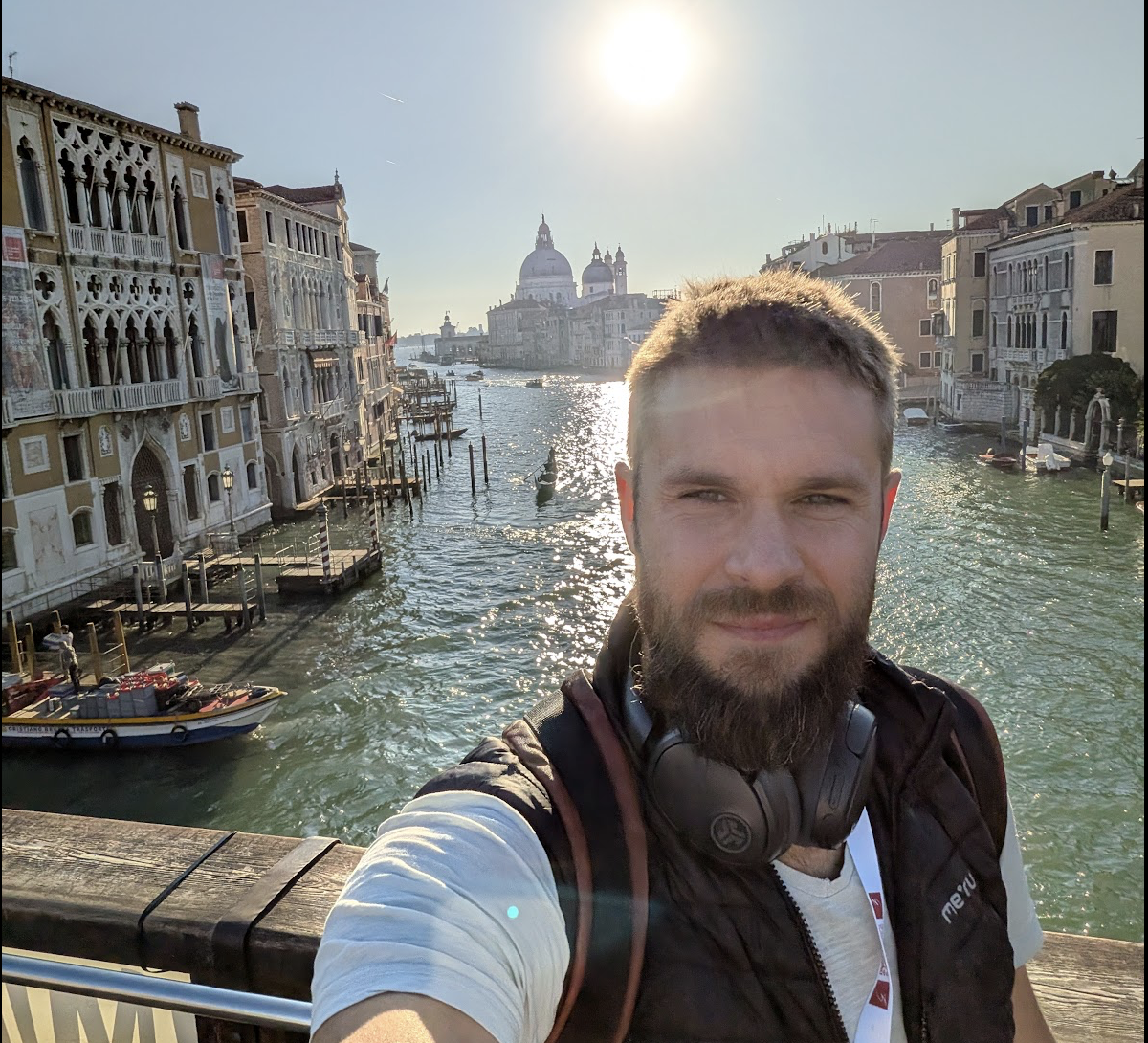
Last week I was in Venice for the Fluctuations in Small Complex Systems VIII conference, held in the extraordinary beautiful Palazzo Cavalli-Franchetti.
A very serious conference. Big names and eminent scholars were giving very technically detailed and serious presentations.
At the social dinner, I found myself talking to Daniel Maria Busiello and Ivan Di Terlizzi. They were at the beating heart of the eight-person team that won the 2025 Ig Nobel Physics Prize for studying the physics of cacio e pepe sauce.
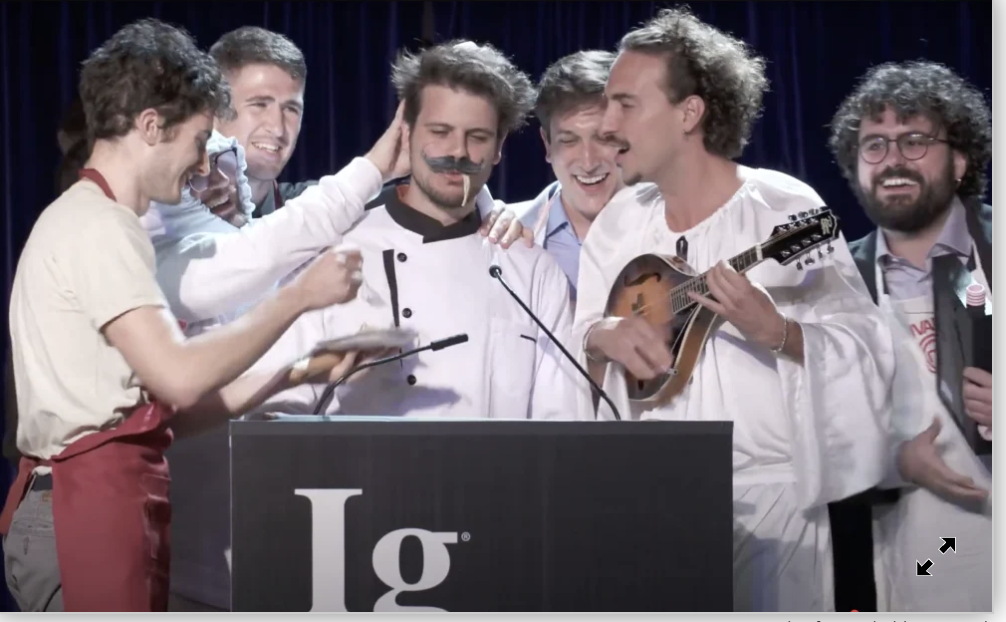
Their paper (open access version and summary) studies the phase transition that makes the cacio e pepe sauce clump instead of becoming smooth and creamy. It is a serious piece of physics about an unserious-sounding problem. What were they doing at this very serious-sounding conference?
After talking to them for a while, I realised just how brilliant and naturally curious and creative Daniel and Ivan are. Ideas and facts about their cacio e pepe and other scientific adventures kept popping out of nowhere during the conversation: we could do this; we could try that. There was no second end. No immediate calculation of whether an idea would produce a high-impact paper, fit the right funding call or generate scientific hype. For that dinner, at least, a question could be interesting simply because it was interesting.
It very much reminded me of when I would talk for hours with my physics classmates during my undergraduate studies in Padova. No “academic game”, just fun and freedom to create and follow curiosity.
Playfulness and ambition are not opposites.
My first reaction was to envy their freedom. My second was to wonder whether this kind of playfulness is a luxury.
Early-career researchers work under a lot of pressure. A postdoc who wants a permanent academic job needs papers, evidence of independence and of being able to secure funding. As I myself wrote here, “understanding the game is essential”. Satisfying one's curiosity is not the same as evidence of being productive, and opening many projects does not constitute the kind of evidence needed to secure a permanent position.
I still believe that.
But talking to Daniel and Ivan made me rethink the trade-off. Neither of them seemed short of ambition. Daniel told me that he was writing fellowship and job applications “day and night” and gave a beautifully serious talk at the conference. Ivan has recently published a single-author paper in Physical Review Letters - a striking demonstration of scientific independence. Their playfulness did not come from indifference to the academic game.
They appeared to be both extremely driven and genuinely entertained by science. Ambition and play embodied in the same person. I found this combination exhilarating, and it reminded me of why I pursued science in the first place. For the opportunity to satisfy my own curiosity about nature, the freedom of creating new ideas, the challenge of understanding something truly new and the ambition of making new discoveries that, even if minor, no one made before in the history of humankind.
Do we need to justify and plan every minute of our thinking time?
The playful attitude of Daniel and Ivan forced me to do an introspection exercise. Have I become too serious and strategic about science?
Having a large research group and a family with three kids means that time is precious. Every minute is mentally (and digitally) accounted for. Should I instead make time for playful unproductive science? and if I was to schedule “unstructured curiosity” into my work calendar from 3 to 4 p.m., would I end up asking myself how many good ideas I generated per hour?
The dinner in Venice worked because it had no deliverable. I was away from Edinburgh, in a beautiful place, speaking with people whose personalities encouraged a lighter conversation. I did not have to extract an outcome from it. I was simply there. (and had one or two too many glasses of beautiful wine).
A culinary digression
The conversation at the Venice dinner also connected with an old pasta experiment of my own. During the very first conference I have took part to as a PhD student (at Les Houches, near Mont Blanc) I was teased by a Russian polymer physics NYU Professor (Alexander Grosberg) who joked that “since I was italian, I needed to demostrate my discoveries with pasta!”. And so I did.
Went back home, made a new ring-shaped pasta, coined a new word for it (anelloni) and made entanglements between ring polymers physically intuitive and relatable even to someone with no scientific background. We even published the recipe in the IOP journal Physics World “A Taste for Anelloni”. These are the sort of things that I have forgotten since becoming a PI of a large group, and that's just sad!
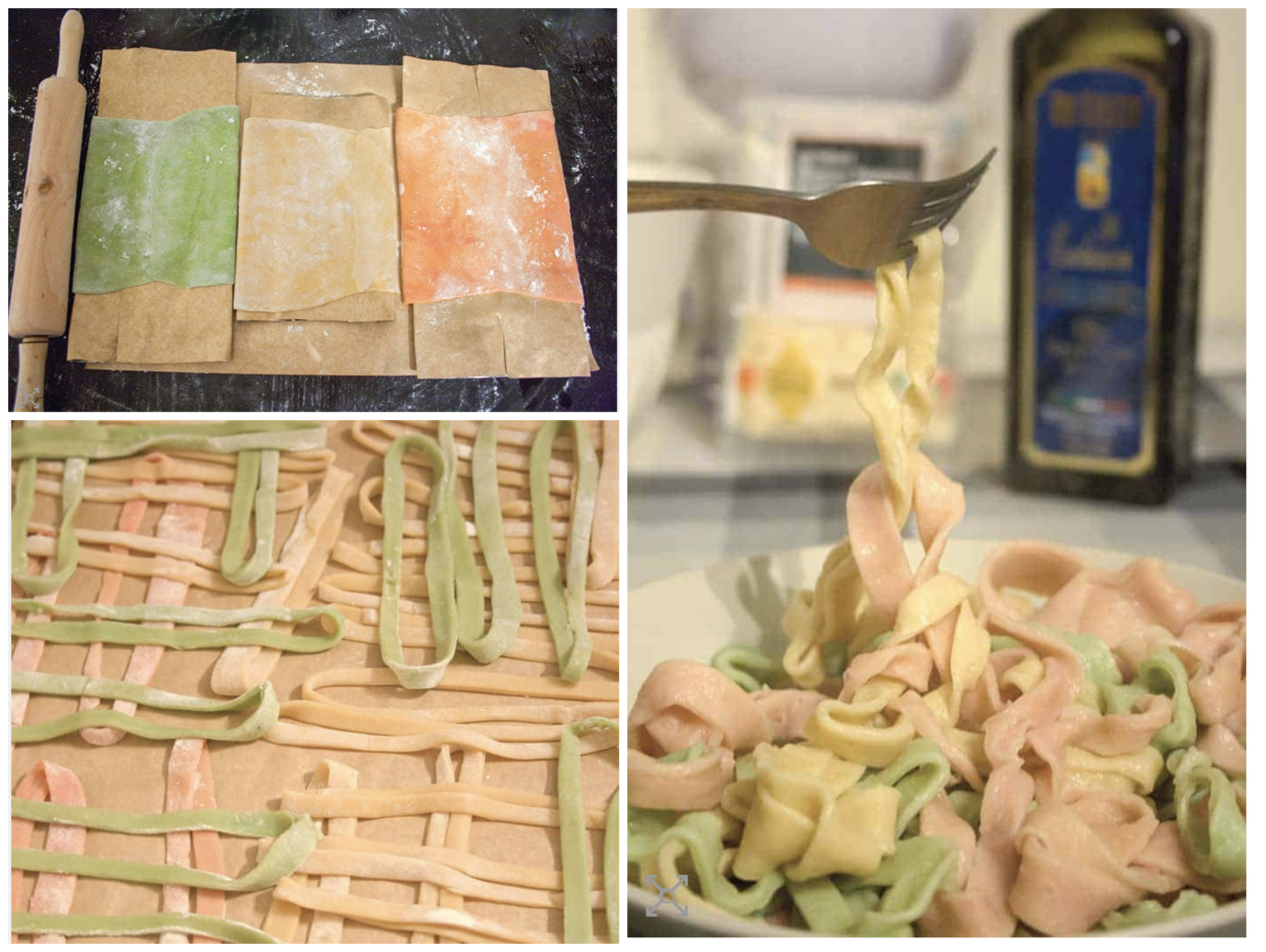
Perhaps the most silly conversation I've had in a long time, in Venice with Ivan and Daniel, we joked that the physics of ring polymers might help anelloni scoop up more cacio e pepe sauce - sounded like a very poor Italian commercial.
Presence and curiosity.
Ivan's and Daniel's cacio e pepe story began from an everyday action: cooking food for friends (thank goodness this is still a practice among some of us!).
To people who are genuinely present in their actions, cooking is not just cooking. It is full of transitions, flows, forces, temperatures and structures. More generally, nature itself is, by definition, the chief physicist's muse (φύσις = phýsis = “nature”): how do bumblebees fly? how do plants know when to germinate or flower? how do birds find their migration route? Why soap bubbles are iridescent?
However, despite the fact that humans are inherently curious, it turns out there is also a limit to what we find interesting. Our curiosity peaks in a “goldilocks zone”: we need to know enough about a topic to have an intuition of the knowledge gap we can gain. If something is too obvious or too remote from what we know, then our curiousty kick doesn't trigger.
Cacio e pepe sits beautifully in that goldilocks zone. Many people personally know the disappointment of a clumped sauce (and the embarrassment if cooking for friends!). The physical intuition is accessible, and the answer is definite enough to test. Also, it turns out that the rigorous physics-guided way to make cacio e pepe -- i.e. adding cornstarch -- can make a lot of nonnas angry because it's not the traditional way to make it, and that's just plain funny per se.
Questions worth pursuing are beautiful.
Playfulness is not the opposite of depth, however it matters how we reach it. A question can appear simple and even silly, yet reveal physics far richer than its appearance.
The question of how to make cacio e pepe sauce right is not only fun, but also useful (it will avoid future embarrassments) and, importantly, beautfiul. It is beautiful not only because it is simple, well defined, intriguing and appeals to the intuition but it has that quality that is difficult to describe and makes you feel good just by thinking about it.
Paul Dirac was known for saying “If one is working from the point of view of getting beauty into one's equation, ... one is on a sure line of progress”. In my experience, beauty is often also a synonym of depth. I yet have to come across a horrible-looking equation or contorted argument that satisfactorily explains a natural phenomenon.
However, strategy can make us overlook beautiful questions.
How many times have you thought: “let's do project X because either (i) it's easy to do as a continuation of project Y or (ii) we can get funding to do it or (iii) we can make a high impact publication”? How many times have you dismissed a project, just becase you know it will not be published in a top journal?
This cynical and pragmatic thinking is probably effective in securing a PhD or a career in academia these days, however we should ask ourselves, how many beautiful questions are we not answering because of this attitude?
Actually, this week's Nobel Prize in Physiology or Medicine offers a striking example in support of this arguemnt. Peter Hegemann and Georg Nagel originally pursued fundamental questions about the alga Chlamydomonas to understand how they sensed light - only decades later it led to the discovery of channelrhodopsin and light-controlled switches which opened the field of optogenetics.
Maybe in the coming age of AI, we will leave all the “serious sounding” questions to AI agents, and we humans will go back to being Renaissance scientists, asking ourselves curious and unserious questions that are (on the surface) not worth spending the tokens for but that will ultimately lead to rich and unexpected insights about nature.
At the dinner in Venice, talking about pasta and the physics of cacio e pepe sauce did not bring us closer to a paper, a grant or a spinout. It may never become anything at all. However, it made me remember to not take science too seriously and to keep looking out for beautiful questions.
Until the next time,
Davide
Join the conversation
When did you last follow a scientific question simply because it was interesting?
Send me your thoughts by email
Your reply will come directly to me by email.